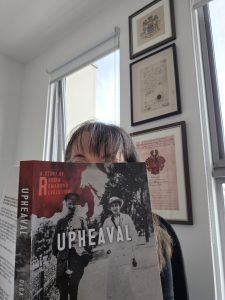
Last year the second edition of my grandmother’s memoir, Upheaval was published. It was the culmination of many years of research, not only from sources on the internet, in academia and in libraries, but also from documents which I inherited. Throughout the process I almost constantly wondered and debated about what to include and what to leave out.
For example, my grandmother thought highly of her grandfather, Count Pyotr Kleinmichel who, in her eyes was someone to be admired. My research into his life however, some of which I wrote about here, uncovered a different story about a man who was more infamous than famous, someone who was both cruel and corrupt. I considered leaving out what I had discovered but then decided both sides of his story needed to be told, if nothing else the two different descriptions of the same person demonstrate how memoir is often not reliable and, more times than not, one-sided.
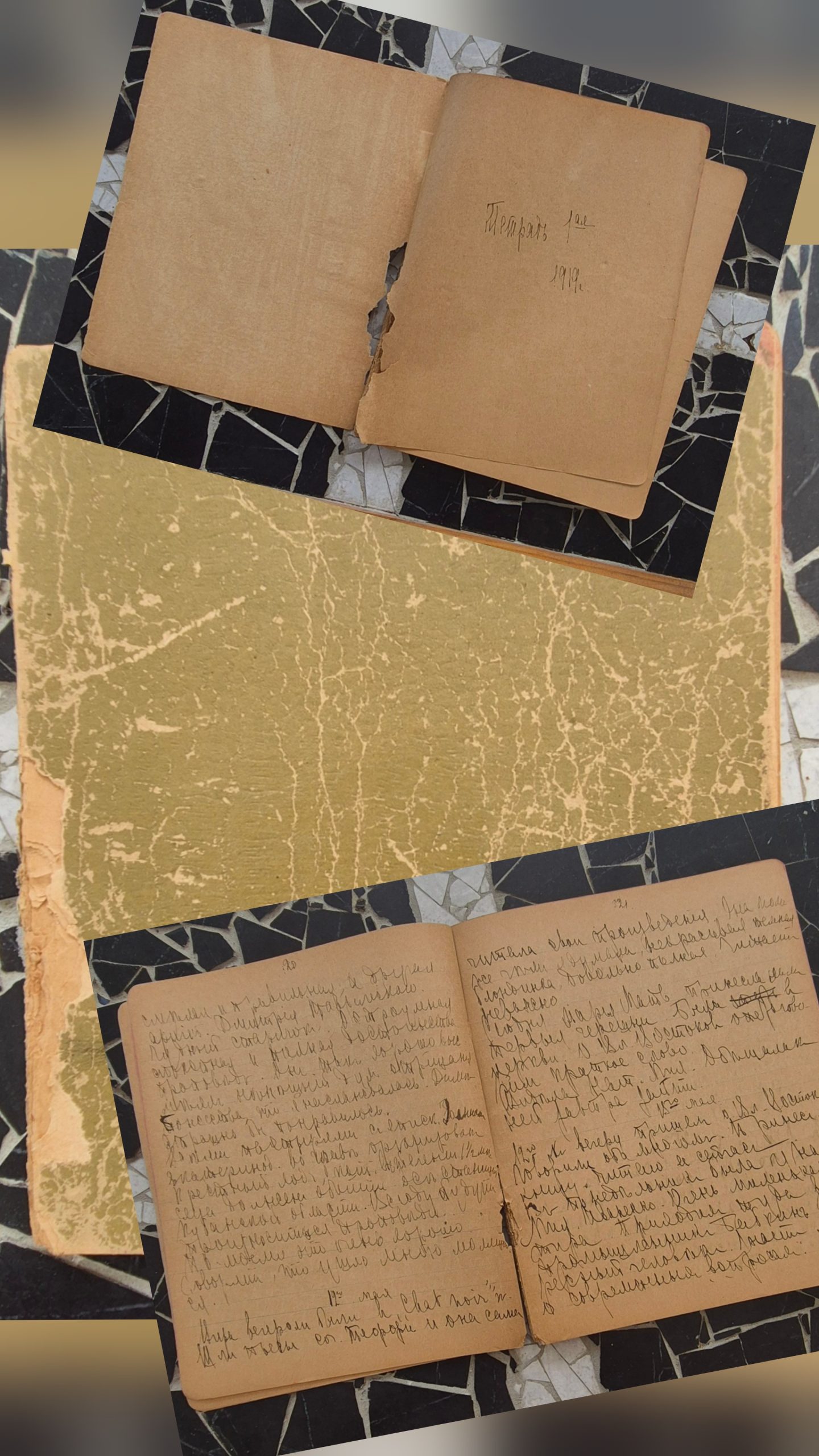
Then, in amongst various other documents and photographs, I found an old pale green exercise book which was definitely worse for wear. The cover was cracked with age and pieces of it were missing. The pages were fragile. I could tell it was written by my grandmother, as I recognised her writing, but I couldn’t read any of it as it was all in Russian. However, the first page had the year 1919 in the title and I guessed it was some sort of diary or account of her life during that year. I wasn’t wrong.
Once my grandmother’s diary was translated it left me in a quandary. Her voice in the diary was quite different to the one in her memoir, which was once described to me as “reportage”. Her diary was much more personal and, at times, did not show her in the best of lights, for example the entries where she describes their cook leaving and then writes, “The new cook refused to start. What are we going to do!?!!!” This I found to be such an example of privilege, especially during the Russian Civil War when chaos ruled. And that is not to mention her anti-Semitic statements of which I felt ashamed.
So I deliberated for a long time whether or not to include my grandmother’s diary in the new edition of her memoir. In the end I decided her recollections of every day life during the Russian Civil War were important and should be read in the context of the time, her station in life and her beliefs which were consistent with those of her peers. Despite her many controversial thoughts, I believe there is interest in how people conducted their lives during conflicts, especially females as there is a general lack of information about females. My grandmother seemed to follow my grandfather to most of the places he was posted during his time fighting with the White Army, and I found that fascinating. Hopefully anyone who reads the second edition of Upheaval will also find my grandmother’s diary intriguing. If this post has interested you, you can get your copy of Upheaval here.